


by Frank + Claudia, 10.04.- 02.05.2024 —————
Chapter 1: Namaste Nepal, an exciting adventure begins.
I (Frank) am still sitting at the airport in Munich and it’s already off to a good start. In Kathmandu the danger of dengue fever is going around. Alerted to it just this morning by geoDiscovery Tours, and already I have a high-dose mosquito spray for Claudia and me in my luggage. Luckily mosquitoes don’t like altitude and cold from about 4,000 metres up.
This afternoon I (Frank) went to sports one more time, a last time for my mind and my soul, and we hope now that we will get through to the end of this trip well. The two of us have prepared very intensively for this trip. Wish us luck and may the good spirits of Buddha in Nepal – in the Mount Everest region with Gokyo Valley and the high passes – always accompany us!
Chapter 2: From the royal city of Bhaktapur to the most dangerous airport in the world.
We have been in Nepal only one day and already we have been able to see, experience and discover quite a lot. Hardly arrived in the capital Kathmandu, we visit the fascinating royal city of Bhaktapur (World Heritage site).
At the same time it’s “New Year’s Eve”, and we travel into the future, into the year 2082. In a short time we age and are 102 and 114 years old. Nepal is some way ahead of us with its Bikram calendar. Who would have thought! We dive into Nepal’s culture and spirituality and by chance pass by colourful festivals. In the late afternoon we continue by minibus for 4 hours to Ramechhap.
We have a restless and short night and woke up often. Presumably it’s because of the upcoming flight from Ramechhap (1,800 m) to Lukla (2,800 m), to the most dangerous airport in the world. Once we arrive at the airport in Ramechhap, we get, admittedly, a bit jittery.
The first scheduled flight with Summit Air is not possible at 6 a.m. due to weather, our next attempt is around 7:30 a.m. Then it actually goes ahead and we board the plane with around 20 other trekkers from all over the world. A stewardess is on board and gives the usual safety instructions.
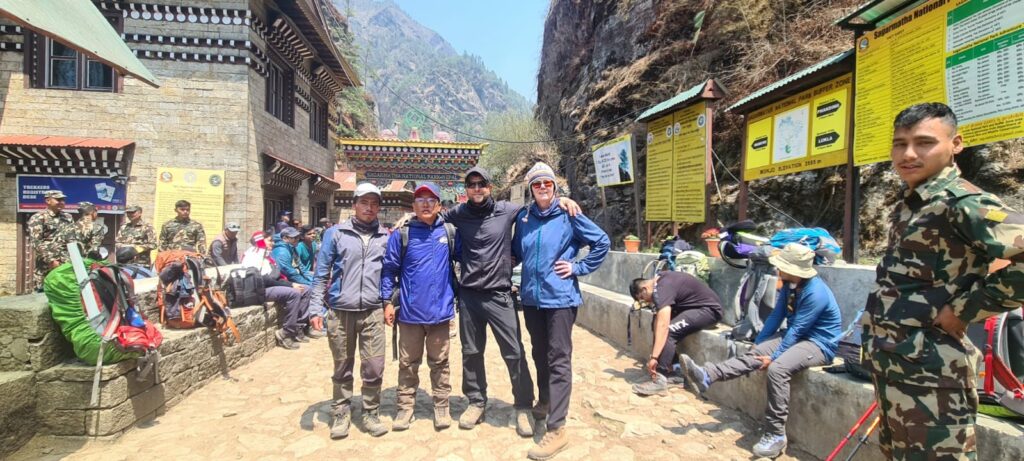
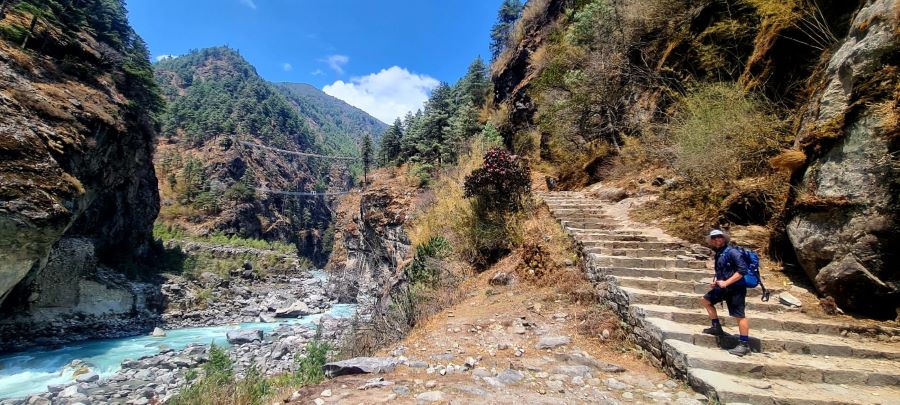
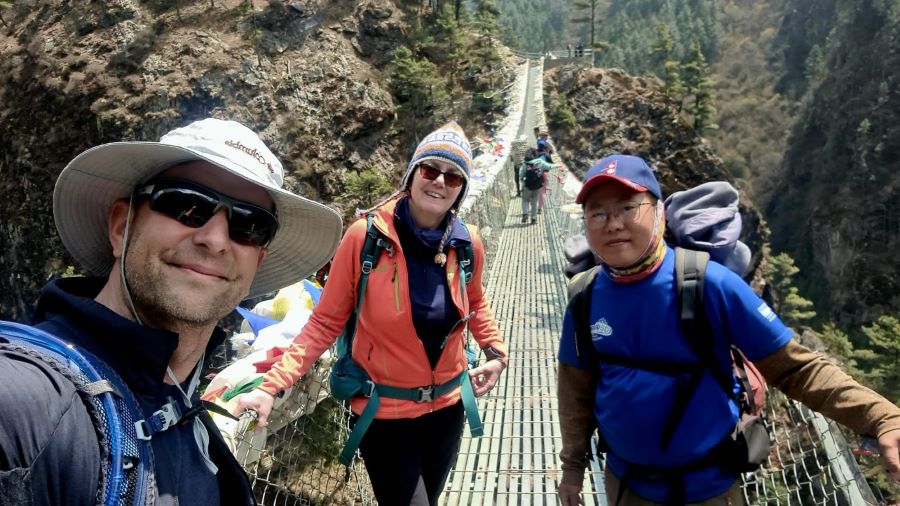
The takeoff is okay, better than expected. En route in the air, hardly any visibility. Nevertheless the landing is initiated and we know, now or never. In the end we got lucky and arrive safely in Lukla. After 3 hours of trekking we reach our first lodge in Phakding. Our highlight the next day in the Himalayas: the world-famous Hillary Bridge (suspension bridge), 135 metres high, named after Edmund Hillary, who first climbed Mount Everest in 1953.
Chapter 3: NEPAL – Never Ending Peace And Love.
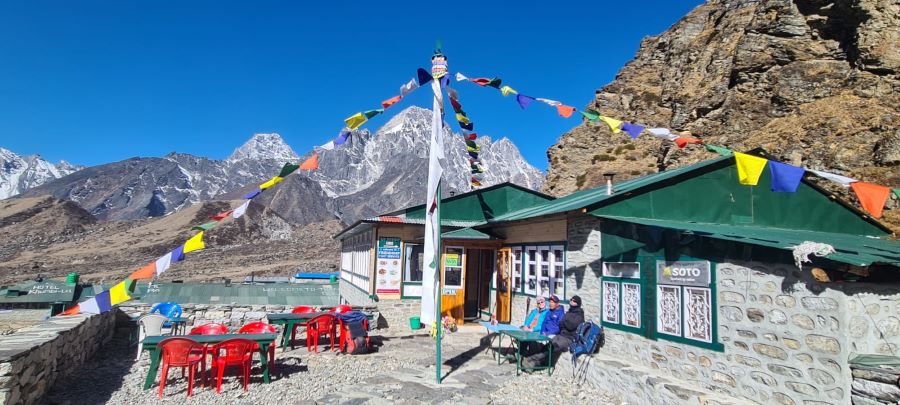
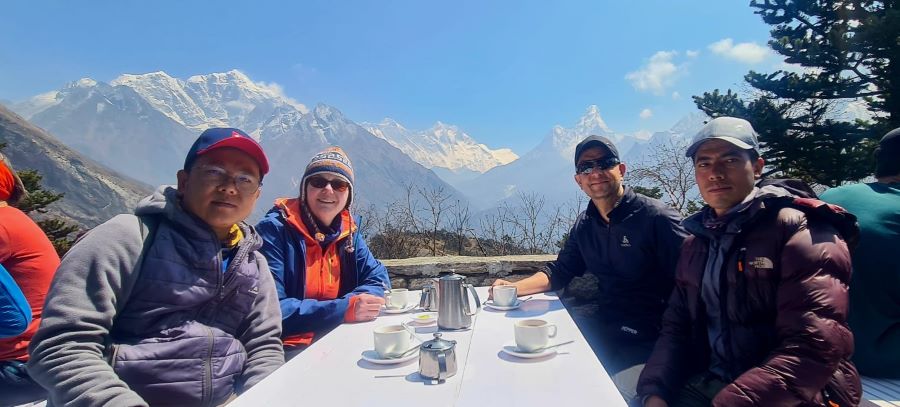
Over the past days we have been surrounded by an incredibly beautiful and fascinating mountain landscape. In the mornings we are rewarded daily with plenty of sunshine and a blue, cloudless sky. The surrounding Nepalese ice giants show themselves at arm’s length from their most beautiful side!
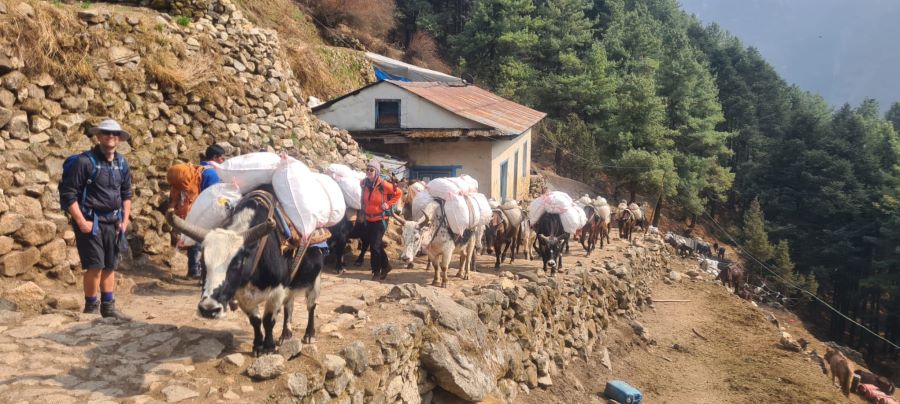
Horses, donkeys and yaks as pack animals cross our path again and again. Roads, cars, lorries and motorbikes are nowhere to be found here, everything has to be carried. It’s incredible – live and in colour – to see what Sherpas can do with 80kg and more on their backs.
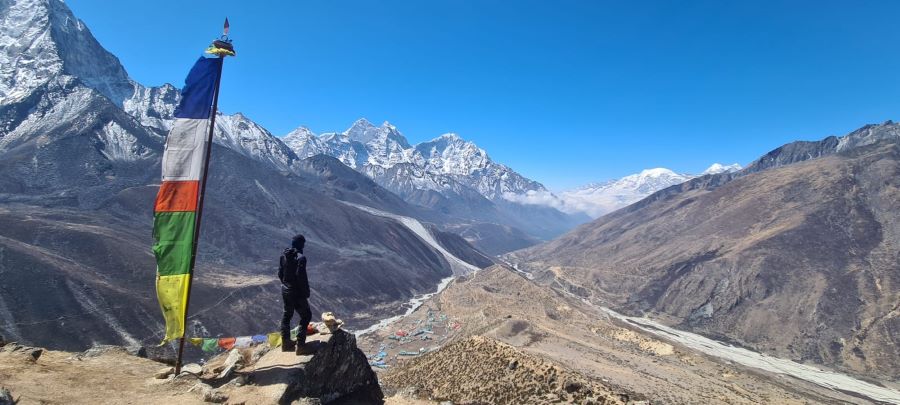
In the meantime we have arrived in Sagarmatha – Mount Everest – National Park and Dingboche at 4,400 metres of altitude, and only a single mountain ridge still separates us. The highest peak in the world we can see again and again from afar, and goosebumps spread.
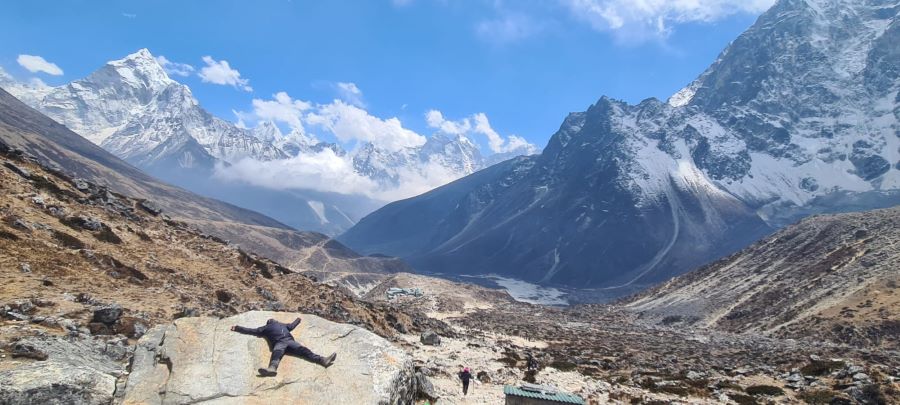
The next day we hike for acclimatisation from Pangboche to Ama Dablam Base Camp at 4,600 m. From there, expeditions start to the Matterhorn of Nepal at 6,856 m. For me (Frank), by far the most beautiful mountain in the world. Once arrived in base camp we meet by chance the mountain hero Dawa Oüngju Sherpa. We learn that Dawa Oüngju Sherpa leads expeditions to Ama Dablam and Mount Everest. Everything is like in a film and we drink tea together with him. He himself has also been on the highest mountain in the world and K2 and tells us snippets of his adventures.
Claudia and I are (still) doing fine healthwise. Altitude sickness is not to be underestimated. The first ones have already had to descend, and tonight too we are surrounded in the lodge by trekkers who are no longer doing well. We strictly stick to the rules, and the tips and tricks from geoDiscovery Tours: always wear a hat, keep your chest warm, no coffee, no alcohol, no meat, no cold or warm showers from 4,000 m up. Let’s hope for the best, that we continue to get through well. If the weather plays along again tomorrow, we’ll crack the 5,000 m mark for the first time.
Chapter 4: A lot experienced and seen in the last few days
around Mount Everest and its myths.
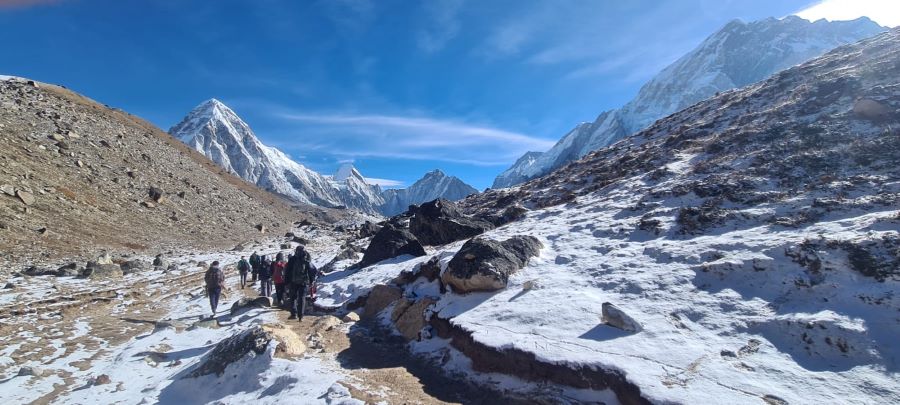
After Thukla Pass at 4,830 m we pass the memorials of the deceased climbers of Mount Everest, also that of Scott Eugene Fischer, whose true life story was made into a blockbuster titled “Everest”. We can highly recommend both the book and the film before embarking on this adventurous trip.
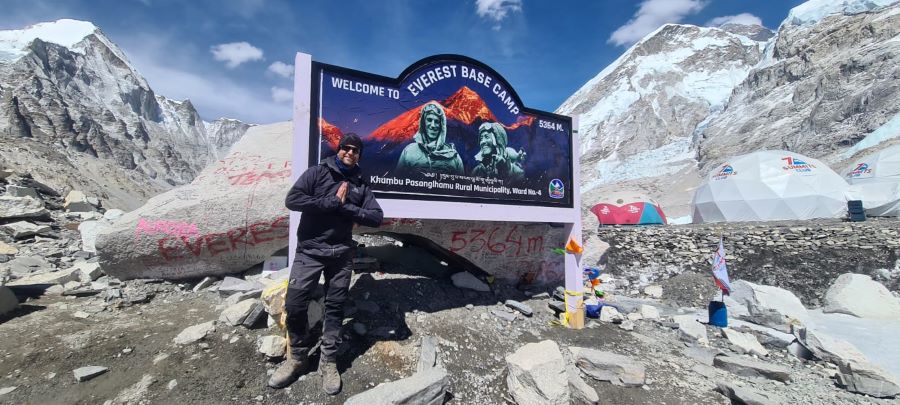
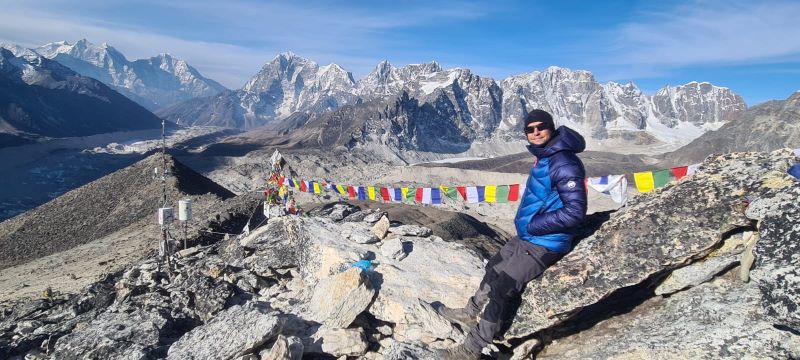
Some time later we actually arrive at Everest Base Camp, at the foot of the highest mountain in the world at 5,346 m. The next morning we continue at 5:30 a.m. with headlamp up to Kala Patthar. At around 5,600 m we reach the highest point of our trip with an incredible and fascinating panoramic view of the summit, the roof of the world, and the Khumbu Glacier. Today too we are lucky, the expected cold and icy winds stay away and we can spend some time on the view point in sunshine with our down jacket.
Nonetheless: the air is very thin, the ascents at these altitudes are strenuous, and we keep reaching our physical and athletic limits. But the views of the eternal ice giants and enormous mountain giants are rewarding and gigantic at the same time, and we are very glad to be able to experience, feel and see these natural beauties up close.
And as the saying goes: no pain, no gain! In order to cope with these altitudes healthwise, acclimatisation days are built into the trip. Our guide from geoDiscovery Tours always makes sure that we observe the corresponding rules. When I (Frank) crossed the 5,000 m mark for the first time, circulatory problems, cough and a runny nose still set in. My circulation is okay again, the rest unfortunately still persists.
Today we arrived in Dzongla at 4,835 m, and we are curious how things will go on tomorrow! Oh yes, last time we showered 10 days ago and my beard (Frank) is growing. If all goes well, we cross Cho La Pass at 5,420 m tomorrow.


Chapter 5: For days uphill and downhill above 4,700 m.
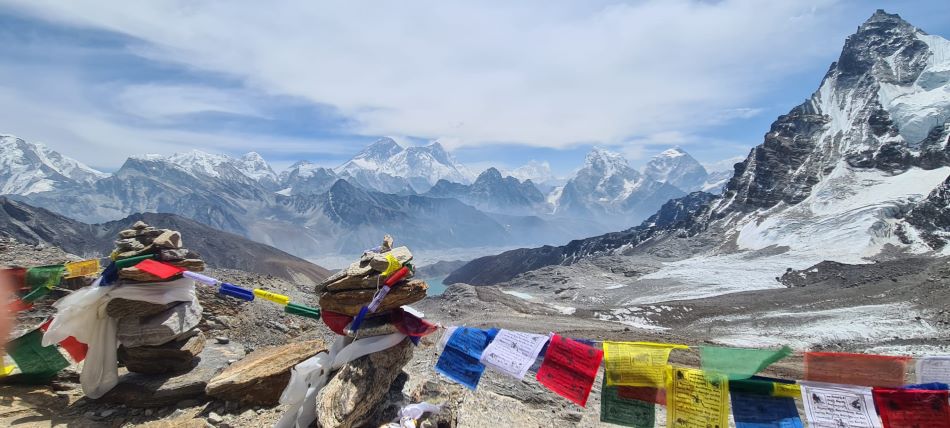
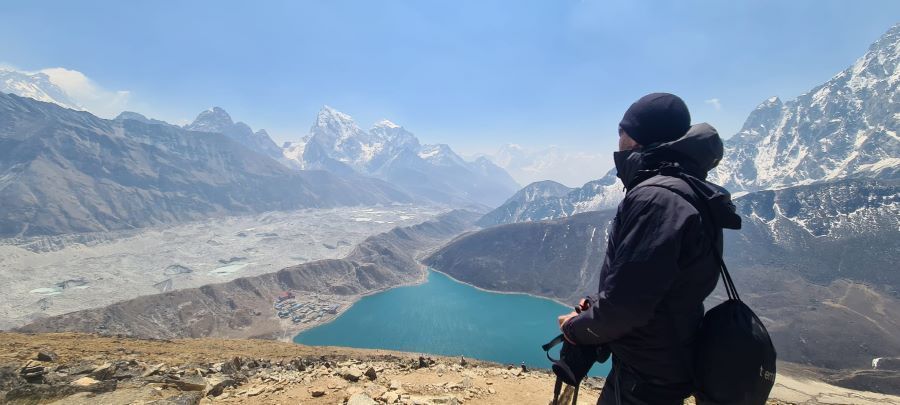
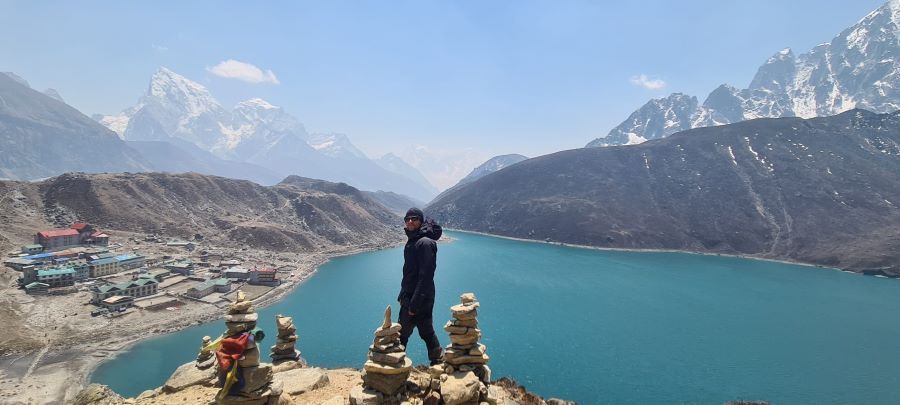
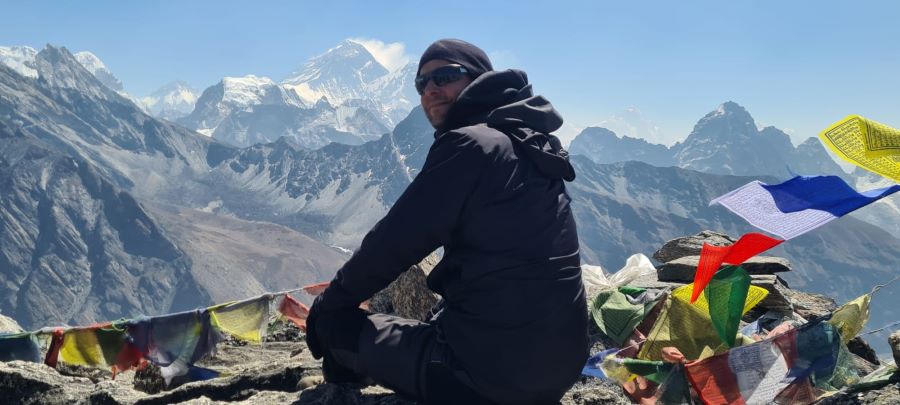
After Cho La Pass at 5,400 m it goes downhill again to Dragnag at 4,700 m. After that we cross the Ngozumpa Glacier, the longest glacier in Nepal and in the whole world. Arriving at the sacred mountain lake, Gokyo Lake, it’s uphill again to Gokyo Ri at 5,360 m with a very impressive and unforgettable panoramic view of Mount Everest (forehead of the sky) and other 8,000ers. For us it was the most beautiful and powerful mountain panorama we have been allowed to see in our lives so far. Then it’s back down and across Renjo Pass at 5,360 m again with a view of the Tibetan and Chinese mountain world.
In the meantime we had got used to the mountain air with an oxygen content of only 50%, but the mountain heroes and mountain goats are and remain for us the Nepalese themselves. It’s incredible what the guides, porters and Sherpas accomplish in their mountain world.
It is also said that catching a cold in these cold high altitudes is unavoidable and you book it along with the trip. On some afternoons the cold and icy wind managed to penetrate through our six layers on the upper body. My runny nose (Frank) recovered, my cough did not. To my luck it did not restrict my physical fitness. So pack lots of loo paper, tissues and medicine for a (heavy) cold from home.


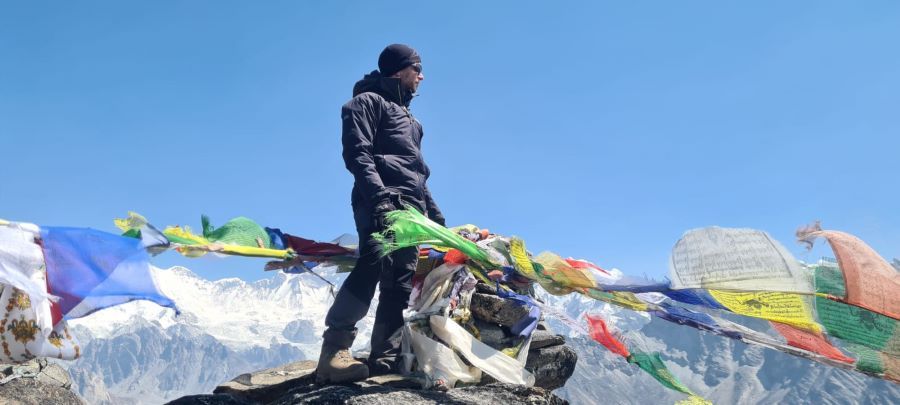

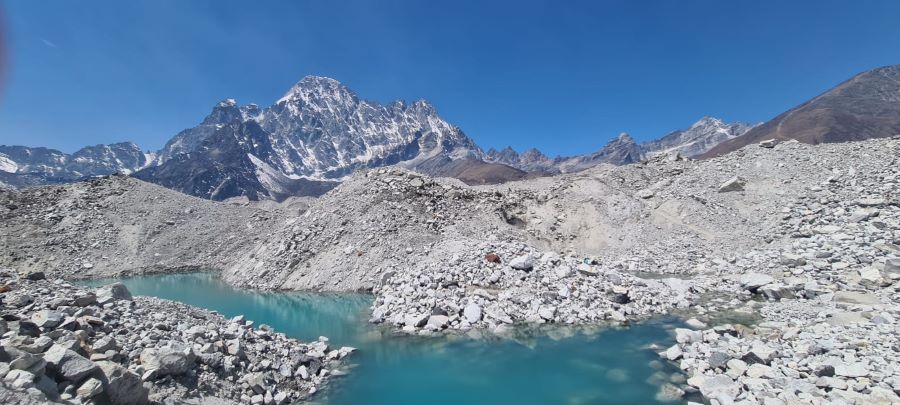
After 2.5 days of descent and over 50 to 60 km downhill, we arrive at the end of our trip back in Lukla at 2,840 m. During the descent it gets warmer and warmer and we can gradually put layer after layer back into the rucksack. In the meantime we hike below the tree line past blooming rhododendron forests, Nepal’s much-loved national flower, across numerous suspension bridges at dizzying heights and from village to village. Throughout the entire national park, still no motorised vehicles in sight.
Due to poor visibility and strong winds in Lukla, the most dangerous airport in the world could not be served for several days – during our trip in the Himalayas. We were lucky! Our plane took off on schedule early in the morning at 6:30 a.m.
A breathtaking trip at dizzying altitudes and daily sunshine is now slowly coming to an end. In some places it was very strenuous and wonderful at the same time. Despite all the difficult challenges we encountered on the way, we followed our itinerary from beginning to end. Other groups we met on our way, regardless of which nations of this earth they came from, unfortunately had to break off or change plans.
Having arrived in Kathmandu yesterday, we had warm water again for the first time after 2.5 weeks, could shower and finally wash our hair. We smell soap again, wear fresh clothes, and a cappuccino after such a long break tastes very delicious. My beard (Frank) is not yet shaven, it is as long as never before, and I am taking it home to Germany as a memento of this trip. Only then will it be: snip snap, beard (almost) off. Farewell, mountaineer’s face!
Our recommendation: travel with geoDiscovery Tours to Nepal.
Claudia and I were in Nepal with geoDiscovery Tours for the second time and we can highly recommend this tour operator. Expert Gülüstan Kolay was always there for us before, during and after the trip. All her advice, tips and tricks were very helpful and we felt well advised, looked after and safe at all times. At this point we would like to say once again many heartfelt thanks for this incredible, intense, unique and adventurous trip to the roof of the world!