Welcome to Tibet – where heaven, earth and humankind draw closer together.


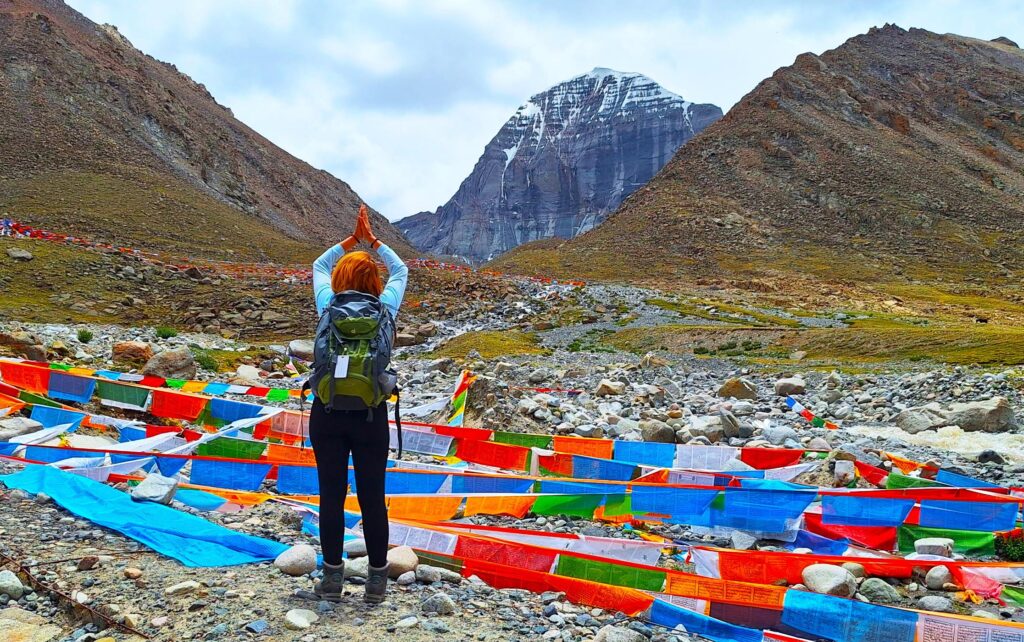
Tibet, the mystical high plateau of Central Asia, is today an autonomous region within the People’s Republic of China and fascinates with a unique combination of mighty nature, deep spirituality and a culture thousands of years old. At an average altitude of over 4,000 metres, one of the highest inhabited areas on earth stretches out, shaped by vast highlands, snow-covered passes and a landscape of extraordinary power and stillness. In the spiritual centre, Lhasa, the Potala Palace, the Jokhang Temple and the pilgrim routes of Barkhor Street still shape religious life today. Tibetan Buddhism is not only preserved here, it is lived every day. Western Tibet is one of the most pristine regions of Asia. Here rises the sacred Mount Kailash at 6,638 metres, revered as the centre of the universe in several religions. Its circumambulation is considered one of the most important pilgrim paths in the Himalaya. Not far away lies Lake Manasarovar, a place of purification and inner reflection.
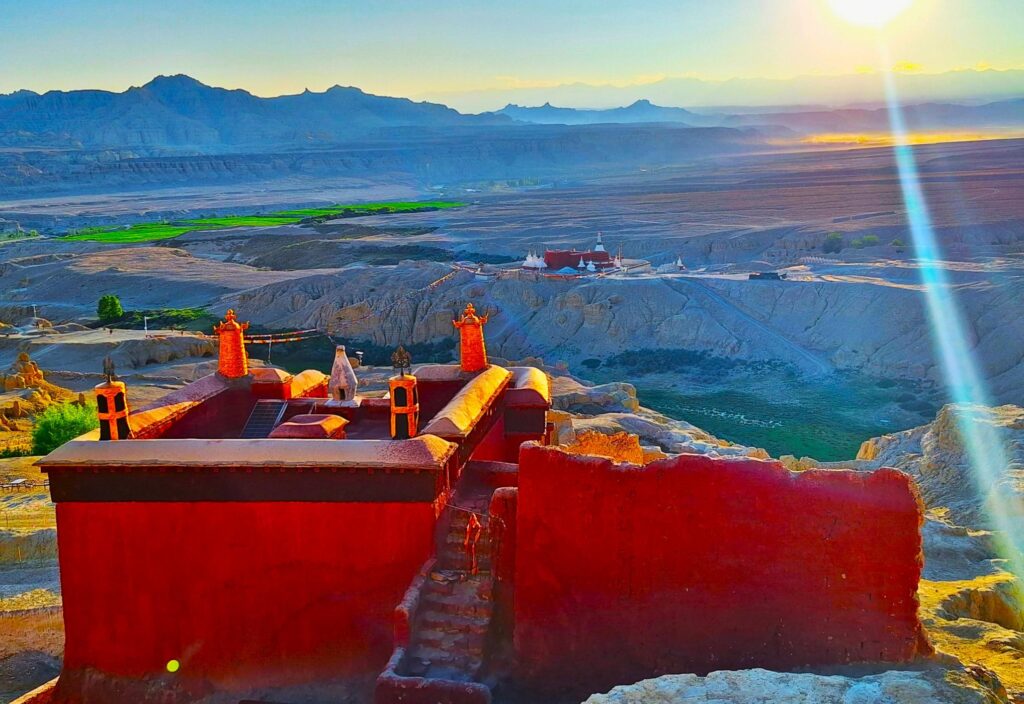
In the remote west, the ruins of the Guge Kingdom testify to a once-flourishing advanced culture. High above the gorges of Zanda, temples, palaces and cave monasteries tell of an important centre of Buddhist art between the 10th and 17th centuries. The mighty backdrop of the Himalaya accompanies every trip. Peaks such as Mount Everest and Shishapangma shape the horizon and lend the highland its incomparable grandeur.
Tibet is characterised by a predominantly Tibetan Buddhist population. The official language is Chinese; in everyday life, Tibetan is spoken. Despite political changes, the spiritual identity remains alive in many places.
Capital: Lhasa
Population: approx. 3.6 million
Highest mountain: Mount Everest approx. 8,849 m
Official language: Tibetan; Chinese widely used
Currency: Chinese Yuan Renminbi
Electricity: 220 Volt, adapter recommended
Time zone: CET plus 7 hours
Religion: Tibetan Buddhism as well as Bön religion


Visa for China / Tibet
For entry into the Tibet Autonomous Region within the People’s Republic of China, EU citizens require a passport that is valid for at least six months on entry and has at least two free, opposing pages.
A visa is generally required for entry to China. For German, Austrian and Swiss citizens, there is currently visa-free entry for short stays of up to 30 days under certain conditions. This regulation is limited in time and is expected to apply until 31.12.2026. As regulations can change at short notice, it is recommended to check the currently valid entry requirements before starting the trip.
Documents to bring along:
– Passport (valid for at least six months, at least two free pages)
– Onward or return flight ticket
– Tibet Travel Permit
Further information is available from your country’s foreign office and from the Embassy of the People’s Republic of China.
Entry to Tibet / special permit:
For travel to the Tibet Autonomous Region, a special permit (“Tibet Travel Permit”) from the Tibet Tourism Bureau is additionally required. This is issued exclusively through a travel agency accredited by the Tourism Bureau and only as part of organised tours. geoDiscovery Tours will arrange this permit for you.
Vaccinations
It is recommended to review and complete the standard vaccinations according to the current vaccination schedule of the Robert Koch Institute. Beyond this, vaccinations against typhoid, hepatitis A and B and possibly yellow fever are recommended. For further information, please refer to the medical advice of your country’s foreign office. For German travellers see the Federal Foreign Office.
Insurance
Travel health insurance (including rescue costs) is essential for your own safety and a prerequisite for booking our tours. In the event of an accident in the mountains that requires a helicopter, the helicopter will not take off until full cost coverage has been confirmed.
Taking out trip cancellation insurance is strongly recommended. Especially flights at bargain prices are usually not rebookable or refundable. In Tibet / China, complications with weather, your health, etc. may also arise that force the trip to be cut short.
We have asked ERGO (travel insurance) to put together different service packages for you. You can book the travel health insurance that suits you at www.reiseversicherung.de .
Please note: We recommend ERGO insurance for travellers residing in Germany and Austria. Other nationals are kindly asked to book their travel insurance with a provider in their own country. Please note that geoDiscovery Tours merely recommends booking travel insurance through ERGO to its guests and assumes no responsibility for the contractual content between the travelling guest and the insurance provider. Every guest is free to book their travel insurance through ERGO or another provider.


Time difference
Although China and Tibet form a huge area spanning 5 time zones, there is only one official time zone for the entire country. On your arrival in the country, the time difference is CET +7 hours. When it is 12 noon in Germany, it is 7 pm in Tibet. Please note that the time difference is reduced by one hour when the clocks change from winter to summer time.
Climate in Tibet / best time to travel
Tibet has a continental highland climate with marked temperature differences between summer and winter. Due to the high altitude, there are also strong fluctuations between day and night. While it is often pleasantly mild during the day in sunshine, temperatures drop significantly after sunset. In the summer months, daytime temperatures are usually between 15 and 25 degrees, but at night they can fall close to 0 degrees or below – especially in higher regions and on passes. Cold nights are not uncommon even in summer. The best time for Tibet tours is from April to November, and for the Kailash circumambulation from May to September. Regardless of the season, a warm jacket should always be carried, as wind, altitude and rapid weather changes can quickly cause temperatures to drop.
Culinary delights
Tibetan cuisine is mainly based on meat, dairy products, barley, millet, pulses and various types of vegetables. Popular dishes include Tsampa (roasted barley flour) and Momos (dumplings), which are often served with Bö Cha, a butter tea. In addition, in many places you will find a wide selection of Chinese restaurants offering a large number of dishes.
Money
Officially, the same currency is used in Tibet as in the People’s Republic of China. The national currency is called Renminbi / Chinese Yuan (CNY/RMB). Click here for the current exchange rate.
For taking cash from Germany, we recommend euros or US dollars in various denominations. It is important that the banknotes have a current print date and are in undamaged condition. Exchange offices are usually located at airports, border railway stations and in hotels, where the exchange is carried out at the officially set rate.
Please note that when exchanging cash you must present your valid passport. In hotels and larger shops, payment with standard credit cards is becoming more common, but with high fees. Alternatively, cash in the local currency can be withdrawn at ATMs in the country’s larger cities with a credit card (Visa, Eurocard/Mastercard) or a European debit card.
Note: Check with your bank whether you can use your debit card / credit card abroad / in China.
Our recommendation: We recommend exchanging your euros for yuan as soon as you arrive at the airport. It is also advisable to keep the receipt you receive. Only with this can you exchange the remaining currency back into your home currency at the end of your trip.
Experience Tibet and discover a world of spirituality, vast spaces and ancient culture. We are happy to advise you – a trip that goes far beyond the visible. Here you will find our travel offers.