




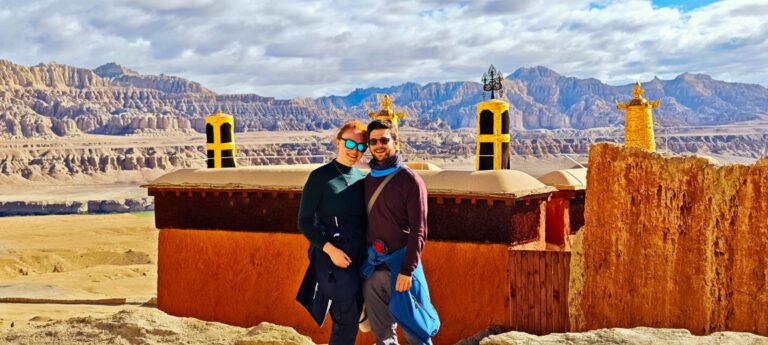
Tibet ist ein beeindruckendes Land
Vielen lieben Dank für die tolle Reise! Wir waren rundum begeistert von geoDiscovery Tours – schon vorab wurden wir gut vorbereitet und haben auch vor Ort eine reibungslose Orga gehabt!Für…
Read full report →
Nepal, Bhutan, Tibet, Ladakh, Tanzania, Kenya & Georgia tours
 Tibet
Tibet

Our Kailash trekking tour with the Guge Kingdom is one of the most impressive pilgrim and cultural journeys in Tibet. We visit the most significant sites such as the sacred Mt. Kailash, Lake Manasarovar, the Mount Everest Base Camp, the historic places of Lhasa, as well as the magical Guge Kingdom.
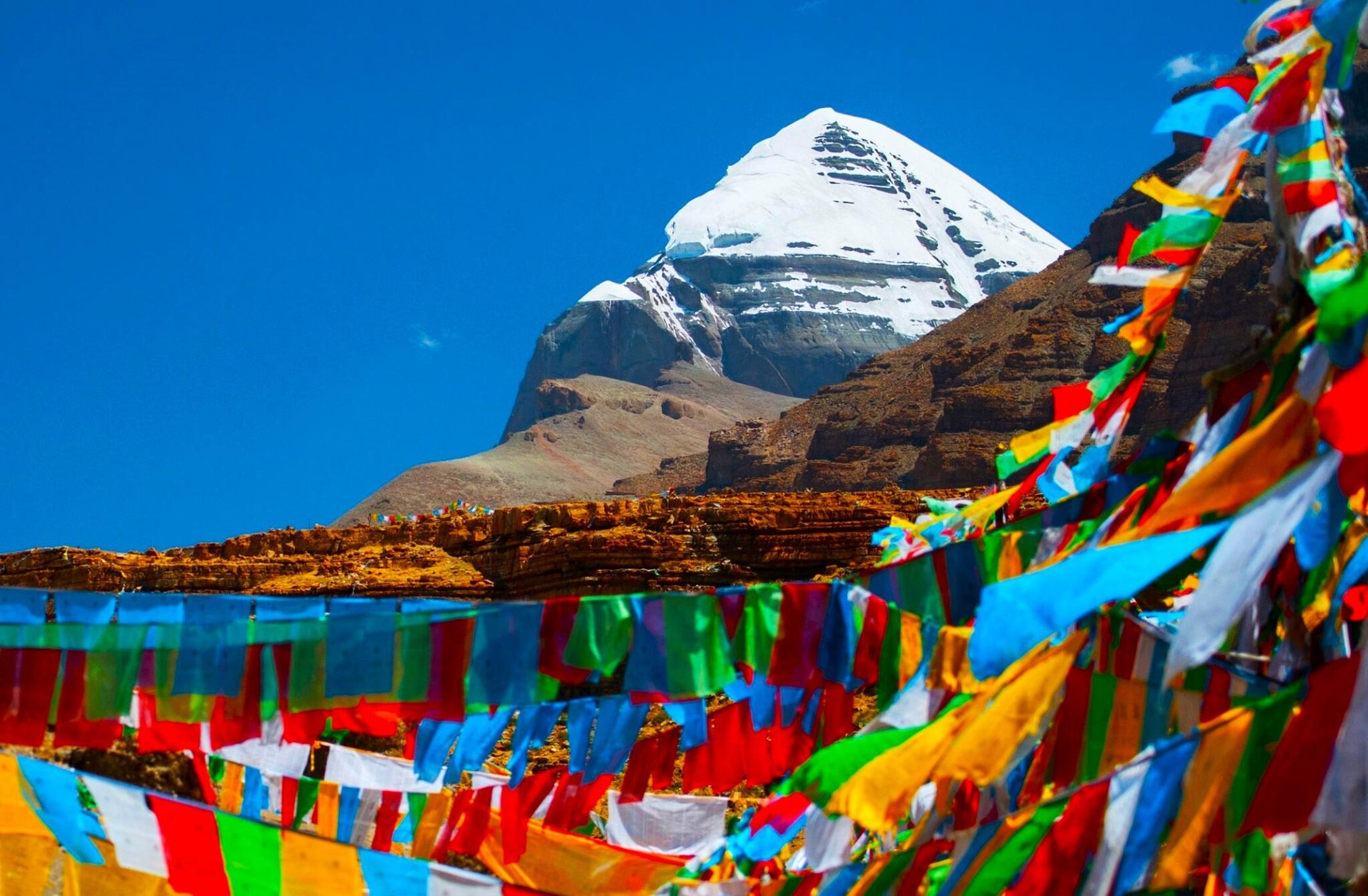
Mt. Kailash is regarded as the most sacred mountain and the centre of the cosmos. It is the source area of four great rivers of Asia and the destination of countless pilgrims from Hinduism, Tibetan Buddhism, Jainism and Bön.
In Lhasa, the majestic Potala Palace and the lively Barkhor Square await us. We continue across the turquoise Yamdrok Tso, on to Gyantse with Pelkor Chode and the Kumbum Stupa, and via Tashilhunpo Monastery to Shigatse. Then we drive to Tingri to the Everest Base Camp (5,000 m) and to Rongbuk Monastery, with magnificent views of the Himalaya and the Transhimalaya.
Our route then leads into the prefecture of Ngari to the sacred Lake Manasarovar and onward into the legendary kingdom of Guge with its myths and spectacular landscapes. Well acclimatised, we begin the kora around the sacred Mt. Kailash. Snow-covered peaks and fluttering prayer flags accompany us up to the 5,630 m high Drolma La pass — a highlight that fills us with deep joy.

During the flight to Lhasa you have a magnificent panoramic view of the snow-capped Himalayan range. At the airport you will be greeted by our local Tibetan tour guide and driver and taken to your hotel. The drive from the airport to the centre of Lhasa takes about 1½ hours. After arrival at the hotel, take your time to rest and to get used to the altitude (3,600 m). It is helpful to take things easy in the first few days and to make sure you drink enough fluids. From now on you should always keep a bottle of mineral water within reach. In the evening a traditional welcome dinner awaits you. Overnight at the hotel (D).
The first attraction of today is a visit to Drepung Monastery, the largest and most influential Tibetan monastery, where more than 10,000 monks once lived. The Dalai Lama was once one of its residents. After lunch you visit another famous monastery, Sera Monastery, founded in 1419 by Tsongkapa’s disciple Jamchen Choeje. A particularly impressive experience is the lively and gesture-rich debate of Buddhist scripture by monks and novices. You can attend the debates from Monday to Saturday between 15:00 and 17:00. In the old town of Lhasa, on Barkhor Street, regarded as the ‘heart of Lhasa’, is the most famous pilgrim path and the busiest bazaar in Lhasa. Originally, Barkhor Street was the only way to walk around Jokhang Monastery and was called the ‘Sacred Street’ by the local Tibetans. Over time, it has gradually expanded into the large historic quarters around Jokhang Temple. With a total length of around 1,000 metres, this ring road has 35 side streets and lanes and thus preserves the traditional appearance and lifestyle of the old city of Lhasa. Here we step into a journey through time and catch glimpses of life from centuries — or even a millennium — ago. In the evening you should definitely visit the street again, which is not far from your hotel; especially in the glow of the lights, a very mystical atmosphere arises. Overnight at the hotel (B).
In the morning your guide will pick you up at the hotel and accompany you to the famous Potala Palace, the symbol of Tibet and a masterpiece of Tibetan architecture. The palace was first built in the 7th century by the 33rd king Songtsen Gangpo and later rebuilt in the 17th century by the 5th Dalai Lama. Today the Potala is a museum and a UNESCO World Heritage Site. Please note that photography is not permitted inside the Potala Palace. At the entrance we recommend having your passport ready. In the afternoon we visit Jokhang Temple in the historic centre of Lhasa. Jokhang Temple is one of the most sacred temples in all of Tibet and has always been full of local pilgrims. Afterwards we visit the Tibet Museum. It houses ‘countless historically rich and cultural relics, Buddhist figures, old Tibetan books and records, as well as folk handicrafts’. Overnight at the hotel (B).

Today we drive along the Yarlung Tsangpo — as the mighty Brahmaputra is called along its Tibetan upper course — to Samye Monastery. Along the way we can admire the unusual sand dunes, the high-altitude meadows and the many branches of the river. In Tsetang we first obtain the permit for the onward tour and then visit one of the most beautiful monasteries in Tibet. Samye Monastery is the first Buddhist monastery in Tibet, built in the 8th century as a mandala-shaped temple and monastery complex about 60 km south-east of Lhasa. In the afternoon we drive back to Lhasa. Overnight at the hotel (B).
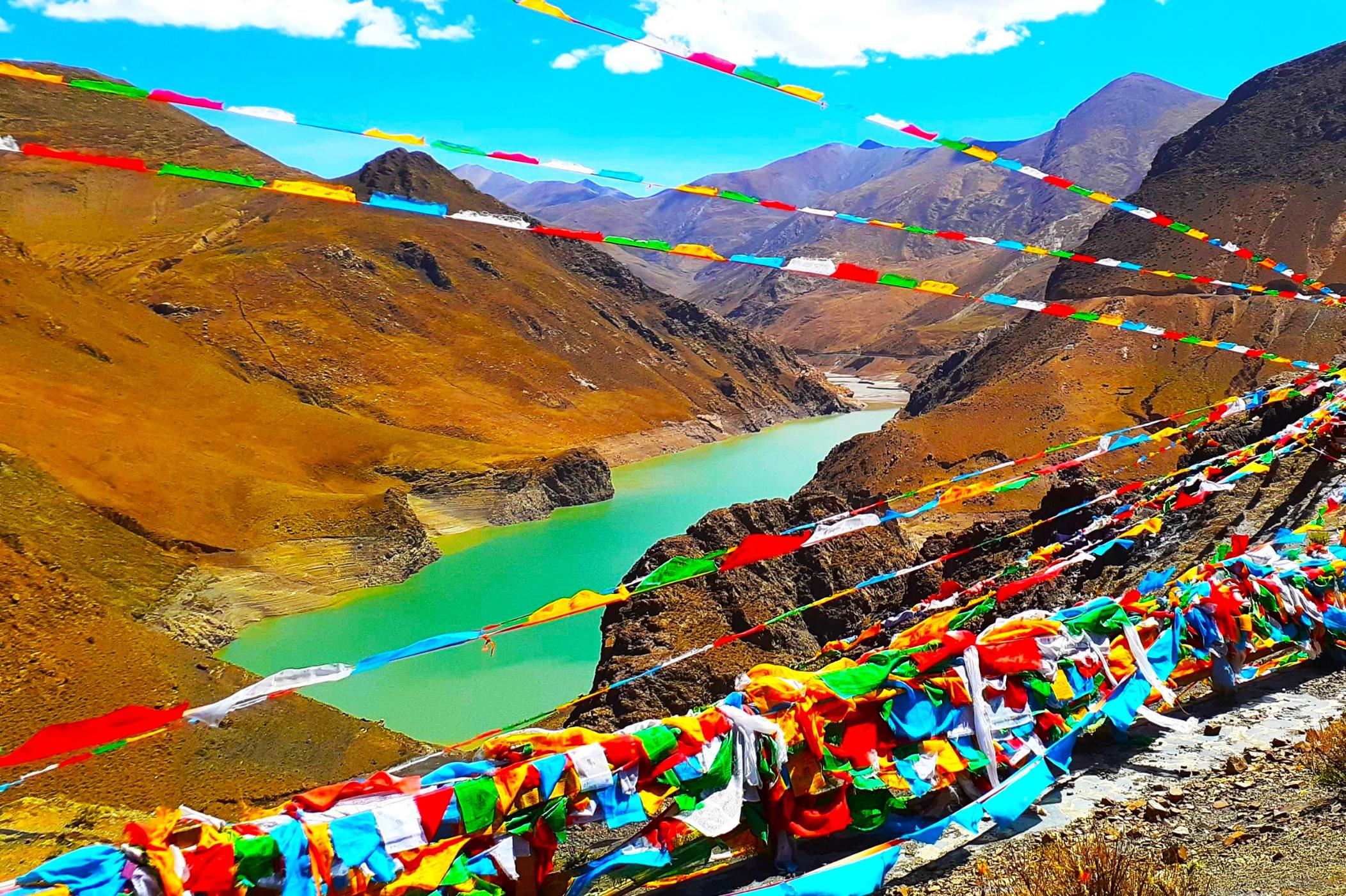
Today we have an early breakfast and continue on to Gyantse, 290 km from Lhasa. The road runs alongside Yamdrok Tso, a vast, blue-reflecting body of water lying at 4,300 metres above sea level, and then climbs up to the 5,010-metre Karo La (pass), a spectacular step between the glaciers. Along the way we visit Samding Monastery, which juts out into the water about 90 metres above Yamdrok Tso at the end of a narrow peninsula. Samding Gompa was destroyed after 1959, but is currently being restored. Samding is the seat of Dorje Pakmo, the consort of the wrathful deity Heruka, the highest female incarnation in Tibet and the third-highest figure in the Lamaist hierarchy after the Dalai Lama and the Panchen Lama. After almost three hours we reach the Kamba Pass (4,700 m). From here we enjoy a beautiful view of the sacred Yamdrok Tso and its perfect turquoise colour. We continue along the lake and reach the town of Nangartse (4,300 m) after an hour, where we stop for lunch. In the afternoon the route takes us further up to Korala, which lies at 5,045 metres above sea level. From up here we can admire the spectacular Nojin Kangsang Glacier (7,206 metres). Before we reach Gyantse, we see another reservoir with turquoise water, nestled in a beautiful landscape in a fascinating valley. After about an hour we reach Gyantse, with its ancient city wall dominated by a fortress from 1390. The original fortress is thought to have been built by Pelkhortsen, the son of the anti-Buddhist king Langdarma, who reigned between 838 and 841. The walls were erected in 1268 after the rise of the Sakyapa sect. Gyantse is known as the ‘City of Heroes’, as the town put up strong resistance in 1903–1904 against the overwhelming force of the British Tibet expedition led by Francis Younghusband. Another highlight of the town is Chode Monastery with its huge ‘Kumbum’, a four-storey, walkable chorten with 108 chapels and countless wall paintings. Overnight at the hotel (B).

Today we first drive to Shigatse, the agricultural centre of Tibet. Along the way we stop at Shalu Monastery, which houses the oldest still-surviving wall paintings in Tibet. On arrival in Shigatse we visit Tashilhunpo Monastery — the seat of the Panchen Lama, regarded as the reincarnation of the Buddha of endless enlightenment. This monastery, built in 1447 by the first Dalai Lama, contains interesting items such as relics of Shakyamuni, the Hall of Maitreya and an outstanding collection of gifts and statues. We then continue on to Sakya and visit Sakya Monastery, another very important monastery of Tibetan Buddhism. It is the mother and main monastery of the Sakya school of the same name and formed the political centre of Tibet in the second half of the 13th century and the first half of the 14th century. Overnight at the hotel (B).
After breakfast we set off for Xegar. With 3,000 inhabitants, the small town is the centre of this remote region of Tibet and serves as the starting point for expeditions to Mount Everest and other peaks. As we continue, we reach Tingri. In good weather we can already make out Mount Everest (8,849 m) on the horizon. The route takes us over the Gyatso La (5,248 m) and the Pang La pass (5,120 m) to the new Mount Everest Base Camp (5,000 m). From here you have a superb view of the gigantic north face of Everest rising up before you. Overnight at a simple hotel (B).
We get up at sunrise to admire the giant in the morning light. After breakfast we visit Rongbuk Monastery and continue along the Friendship Highway to the deep blue Pelkhu Tso (lake). On a short walk around the lake we enjoy the fresh wind and the magic of the landscape. Driving on along the main Himalayan range, we pass a few typical Tibetan villages and reach Saga (4,600 m). With a little luck we have a view of the peaks of Shishapangma (8,046 m), Langtang (7,227 m) and Gaurishanker (7,134 m). Overnight at the hotel (B).

Today we have a longer drive of more than 500 km ahead of us. We set off in the direction of Paryang, which lies almost 450 km from Saga. From Paryang we make our way across a plain to Lake Manasarovar, which lies only 30 km south of Mount Kailash. As we approach this wonderfully situated sacred lake, the historic Chiu Monastery becomes visible on the north-western shore. From this magnificent viewpoint, with a bit of luck we can catch a first grand view of the majestic Mount Kailash. We are finally close to it! Optionally, we can drive around Lake Manasarovar. Overnight at a simple guesthouse with dormitory rooms, no shower, toilets outside (B|L|D).
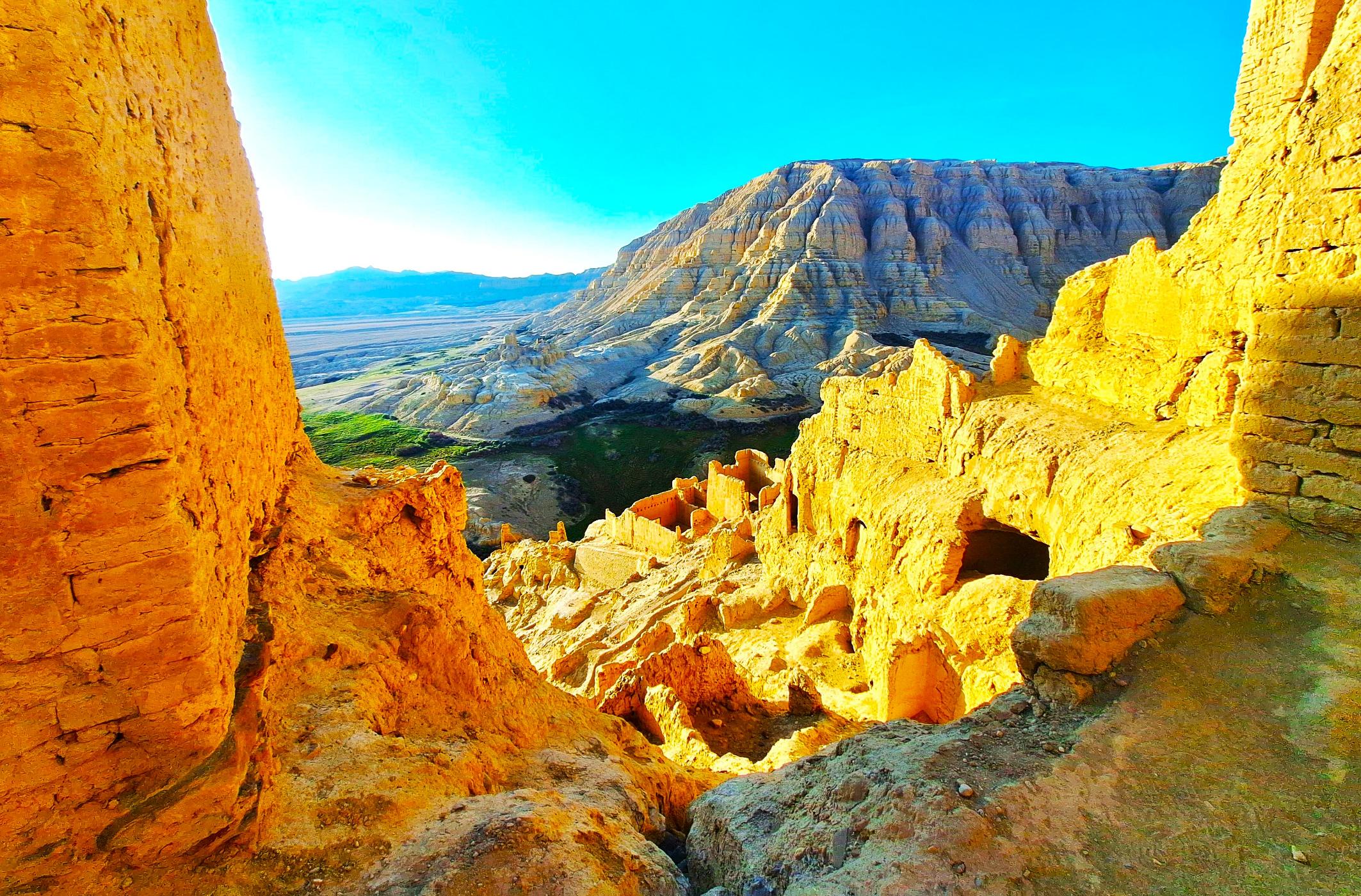
Very early in the morning we drive to the viewpoint of Mt. Kailash and admire the sacred giant in the morning light. After breakfast we set off towards Tirthapuri, leaving behind the unique landscape of Lake Manasarovar with views of Gurla Mandhata (7,694 m). We drive along the Sutlej Gorge and through the Garuda Valley to Guge. The extraordinary landscape of Zanda will captivate and enchant us from afar. On the way, with a little luck with the weather, we have a singular view across the gorge all the way to the Indian Himalaya on the horizon, with the sacred Nanda Devi (7,816 m), India’s highest mountain. At Tirthapuri we make a short stop. After Mount Kailash and Lake Manasarovar, Tirthapuri is regarded as the third most important Buddhist pilgrimage site in Western Tibet. Tirthapuri (also called Zhadaburi, 4,310 m) lies north-west of Mount Kailash and on the northern bank of the Sutlej River and is famous for its sacred hot springs and the Guru Rinpoche Monastery (Tirthapuri Monastery). In the small village of Zanda (3,800 m) stands Tholing Monastery, one of the few still-visible buildings of the former Kingdom of Guge. The monastery’s founding dates back to 996. The monastery was the religious centre of the Guge realm. The murals in Tsaparang and Tholing from the 11th–15th centuries are regarded as a masterpiece and rank among the finest and best-preserved examples of Buddhist icon painting. The medieval-feeling town, with its particular style of building, is one of Tibet’s great cultural relics and shines golden in the fading evening light. An unforgettable sight that warms our hearts. Overnight at a simple hotel (B).
Before breakfast we drive to the bus station to be at the fairy-tale ruins of Guge for sunrise at around 08:00. The entire day is dedicated to visiting the ruins of Tsaparang, the old fortress-like capital of Guge. Within its walls, and later at Tholing Monastery, we find remnants of the ancient Guge civilisation, which from the 11th to the 17th century shaped the fate of this remote region. The works were carried out by artists from neighbouring Ladakh. Afterwards you visit the Donggar ruins, the largest known cave-monastery complex in Tibet, with more than 200 caves. Overnight at a simple hotel (B).

Today we once again visit the largest Buddhist cave ruins in the world — the ruins of Dongga and Piyang. We admire the unparalleled ruins of the ancient city and marvel at the countless beautiful paintings inside. The Dongga and Piyang caves were once the centre of political life, economy and culture of the Kingdom of Guge. These cave systems, reminiscent of honeycombs, lie on the cliffs behind the village of Dongga. Inside, elaborate murals serve as historical records. These works of art, painted with unique minerals, vividly depict the prosperity of the Guge Kingdom and still fascinate today with their brilliance. After the visit we drive on to Darchen. After arrival we can rest at the hotel to prepare for the upcoming three-day trek and gather our strength. Overnight at the hotel (B).
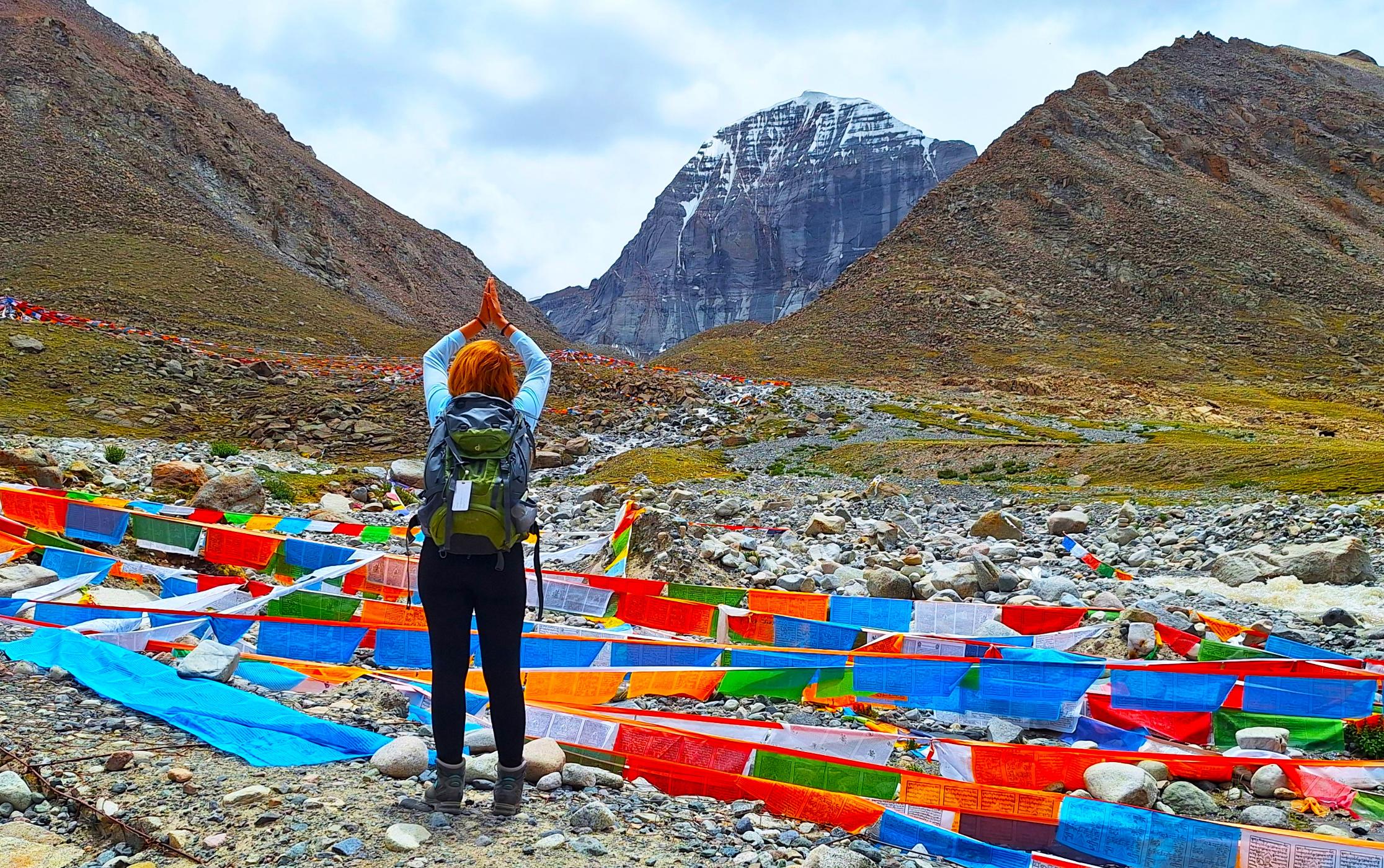
Today is the first day of your kora around Mount Kailash. During this walk we will admire the breathtaking landscape along the south, south-west and west slopes of Mount Kailash. From Tarpoche we hike across green meadows and along picturesque streams to the Lha Chu Valley. The path overlooks the turquoise river, which plunges through a narrow gorge with high, steep cliffs. Along the way the north face of Kailash comes into view. Hindus, Buddhists, Bönpos and Jains — followers of these four religions revere Kailash as a link between humans and the cosmos and walk the 51-kilometre circuit, in some cases more than once. There are countless other mountains in the Himalaya that rise higher, but none of them can match Kailash in shape and location. The gigantic mandala also includes the four great rivers Brahmaputra, Karnali, Indus and Sutlej, which flow from the central Mount Kailash in the four cardinal directions and supply millions of people with water. The trail leads to the 13th-century Dirapuk Monastery. In the evening, from Dirapuk, enjoy the impressive moment of the sunset mood over Mount Kailash. In clear weather, when the sun sets gently, you can wait patiently for the afterglow to illuminate the steep cliffs of the western face. Overnight at a simple guesthouse with dormitory rooms, no shower, toilets outside (B|L|D).

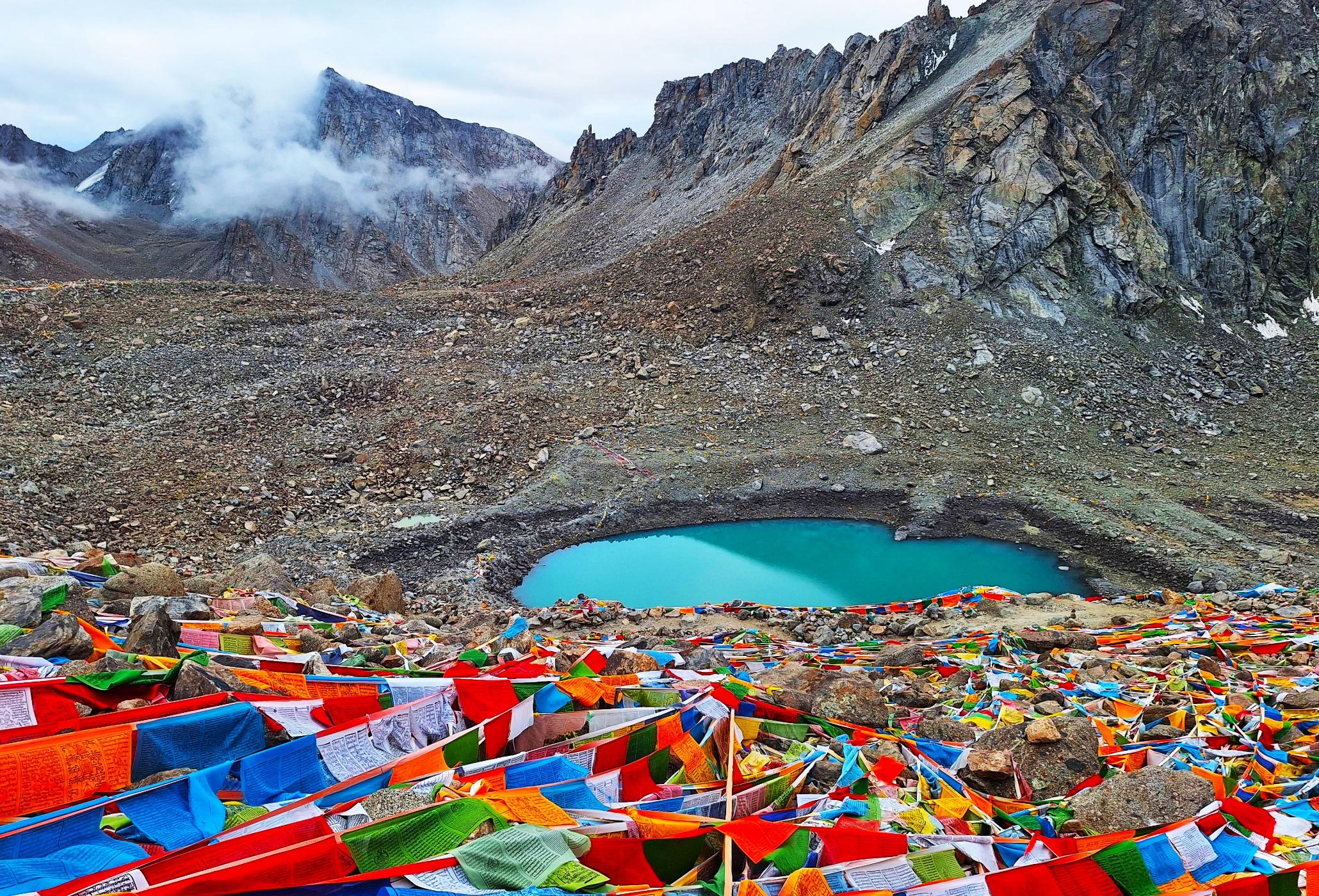
Today we plan to cross the Drolma La. About a 10-hour hike lies ahead of us, so we get up very early and begin the day tour at 4:00 in the morning. Tibetans believe that by circumambulating Kailash they walk the path of death and rebirth. The strenuous ascent to the top of the pass symbolises the state (bardo) between death and rebirth (on the pass). The Lha Chu Valley fades from view as we turn into the Drolma Chu Valley. After about four hours we reach the Drolma La (5,630 m), the highest point of our journey. From here we enjoy a breathtaking view of Lake Thukpe Dzingbu, also known as the Lake of Compassion. The trail leads steeply down to the flat fields of Zutulpuk, where there is a 13th-century monastery and meditation caves. One of them is the Milarepa cave. It is believed that the imprints of Milarepa’s feet and elbows are embedded throughout this cave of mani stones. After a long and demanding day’s hike of about 10 hours we reach Zutulpuk, our place for the night. Overnight at a simple guesthouse with dormitory rooms, no shower, toilets outside (B|L|D).
The last day of the Kailash Parikrama / kora is an easy walk through a beautiful, wide valley. We walk for two to three hours to our vehicle, which is waiting for us, and then drive on to Saga. The drive takes about seven hours. Overnight at the hotel (B).
On the drive back via Xegar to Shigatse we once again enjoy the vastness and solitude of the Tibetan plateau and have plenty of time to look back on the many highlights of this unforgettable journey. Overnight at the hotel (B).

Gradually our journey is drawing to a close. We drive the last stretch along the ‘Friendship Highway’ to Lhasa. The rest of the day is at your leisure, which you can spend with further sightseeing, shopping or relaxing in the hotel garden. Overnight at the hotel (B).
The day is at your leisure until departure. Transfer to the airport and farewell (B).
We reserve the right to make changes to the programme due to special events, force majeure or weather conditions.
B = Breakfast | L = Lunch | D = Dinner
This tour can be booked privately for you or your group on any date, and also with a German-speaking guide, for an additional fee.
| Status | Date | Price | Language | Info | |
|---|---|---|---|---|---|
| Bookable | 22.05. – 08.06.2027 | 3.590 € EZZ 640 € |
 EN EN |
Inquire | |
| Bookable | 29.05. – 15.06.2027 | 3.590 € EZZ 640 € |
EN |
Inquire | |
| Bookable | 04.06. – 21.06.2027 | 3.990 € EZZ 640 € |
 DE DE |
Saga Dawa Festival | Inquire |
| Bookable | 26.06. – 13.07.2027 | 3.590 € EZZ 640 € |
EN |
Inquire | |
| Bookable | 03.07. – 20.07.2027 | 3.590 € EZZ 640 € |
EN |
Inquire | |
| Bookable | 10.07. – 27.07.2027 | 3.590 € EZZ 640 € |
EN |
Inquire | |
| Bookable | 24.07. – 10.08.2027 | 3.590 € EZZ 640 € |
EN |
Inquire | |
| Bookable | 06.08. – 23.08.2027 | 3.590 € EZZ 640 € |
EN |
Inquire | |
| Bookable | 19.08. – 05.09.2027 | 3.590 € EZZ 640 € |
EN |
Inquire | |
| Bookable | 27.08. – 13.09.2027 | 3.590 € EZZ 640 € |
EN |
Inquire | |
| Bookable | 04.09. – 21.09.2027 | 3.590 € EZZ 640 € |
EN |
Inquire |
Read what our guests share about their experiences on this and other tours.
Vielen lieben Dank für die tolle Reise! Wir waren rundum begeistert von geoDiscovery Tours – schon vorab wurden wir gut vorbereitet und haben auch vor Ort eine reibungslose Orga gehabt!Für…
Read full report →It is recommended to check and, if necessary, complete the standard vaccinations in accordance with the current vaccination schedule of the Robert Koch-Institut. In addition, vaccinations against typhoid as well as hepatitis A and B are recommended; depending on your itinerary, a yellow fever vaccination may also be advisable. You can find up-to-date medical information from the German Federal Foreign Office.
EU citizens require a passport valid for at least another six months to enter Tibet. For nationals of Germany, Austria and Switzerland, no visa is currently required for stays of up to 30 days. Visa-free entry is expected to apply until 31 December 2026.
The Tibet Permit required for Tibet will be applied for by us on your behalf.
Tibet has a predominantly continental climate with pronounced temperature differences between summer and winter. Due to the high altitude, there are also significant fluctuations between day and night, especially during the cold winter months. The best time to travel is therefore between April and November.
For safety reasons, travel health insurance including rescue and recovery costs is mandatory and a prerequisite for booking our trips. Taking out trip cancellation and trip interruption insurance is strongly recommended, as inexpensive flights in particular usually cannot be rebooked or cancelled free of charge, and weather- or health-related reasons may make it necessary to interrupt a trip.
We recommend insurance policies from ERGO Reiseversicherung (www.reiseversicherung.de) for travellers residing in Germany and Austria. Travellers from other countries are kindly asked to take out insurance through a provider in their home country.
The choice of insurance provider is the responsibility of the traveller.