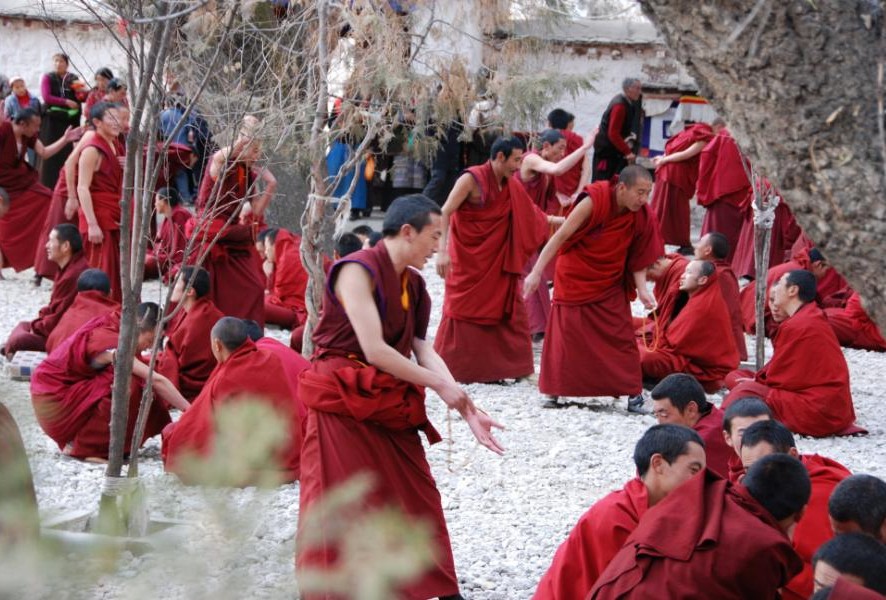
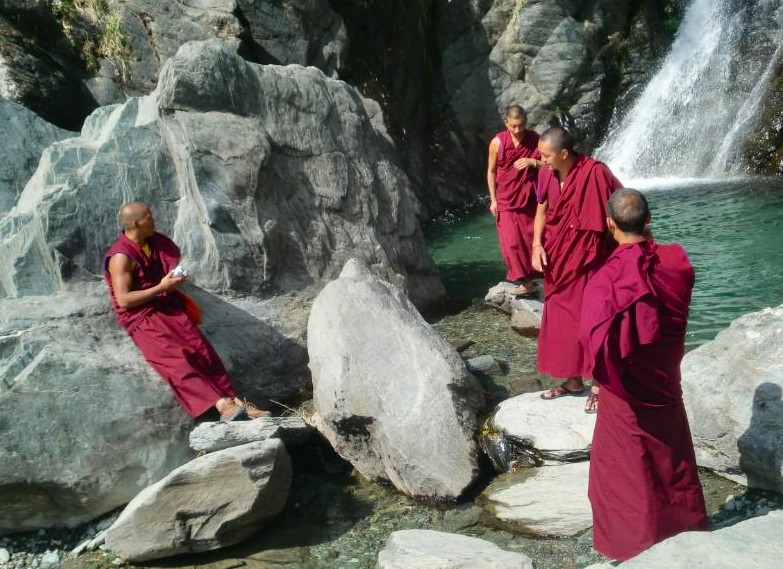
A trip to Tibet is much more than just an adventure. For many it is a spiritual experience, a pilgrimage, a return to oneself. At the heart of this journey often stands the Kailash circumambulation, a unique trek around the sacred Mt. Kailash, which is not only geographically but also spiritually at the heart of the Tibetan highlands.


The most sacred mountain in Asia
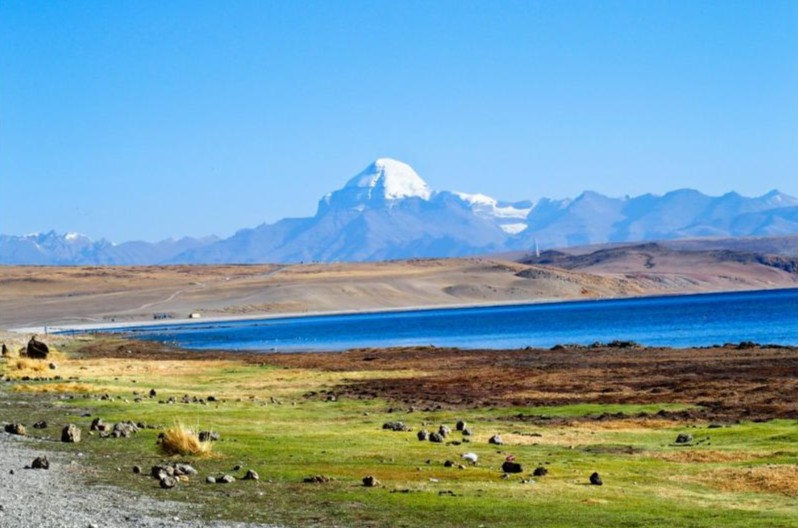
The 6,638-metre-high Mt. Kailash rises majestically in western Tibet and is considered a sacred mountain in four major religions: in Hinduism it is the abode of Shiva, in Buddhism the seat of the tantric Buddha Demchok, in Jainism the place of liberation of the first Tirthankara, and for the Bön religion it is the most sacred place on earth.
None of these religions permits the ascent of the mountain – its untouched state is part of its spiritual power. Instead, believers walk around the mountain on foot – a circumambulation that is considered a purification of the soul.
Significance beyond religion – source region of mighty rivers
But Mt. Kailash is not only significant spiritually. Geographically, it is a hydrological centre of Asia: four of the largest rivers on the continent rise in its vicinity –
Indus: Flows west and is the main river of Pakistan and northwestern India.
Brahmaputra: Flows east and later, together with the Ganges, forms the largest river delta in the world, in Bangladesh.
Sutlej: A tributary of the Indus that flows through India and Pakistan.
Karnali: A tributary of the Ganges that flows through Nepal and India.
These rivers supply millions of people in India, Nepal, Pakistan and Tibet with water – another reason why this place is of such global importance.
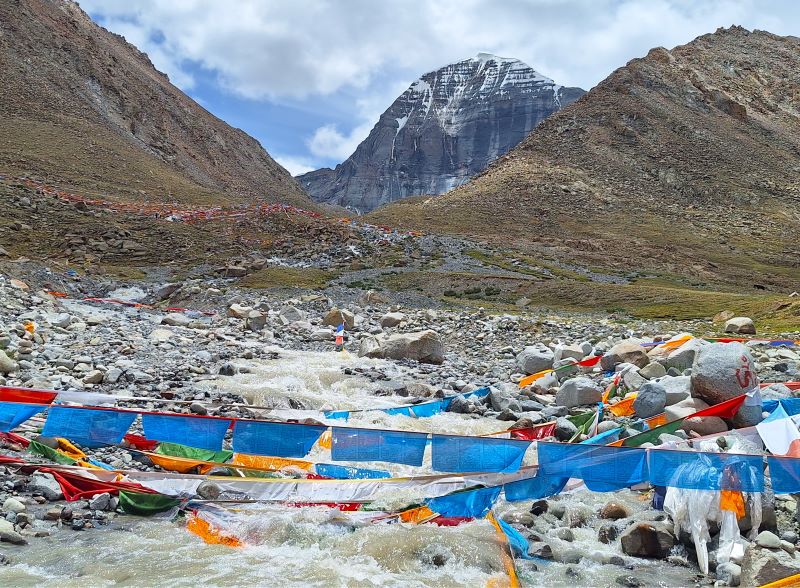
The Kailash circumambulation – trekking on the Kora
The classic Kailash circumambulation, also called the “Kora“, is about 52 kilometres long and usually takes three days. The highest point of the trek is the Dölma La Pass, which at 5,630 metres is a real challenge – both physically and mentally.
The altitude makes thorough acclimatisation in advance essential. Anyone who starts the Kailash circumambulation unprepared risks serious altitude problems. For this reason, the circumambulation is usually only part of a longer Tibet trip that allows enough time for adaptation.
More than just Kailash – highlights of a Tibet trip
A well-planned trip to the Kailash circumambulation usually also includes other highlights of Tibet:
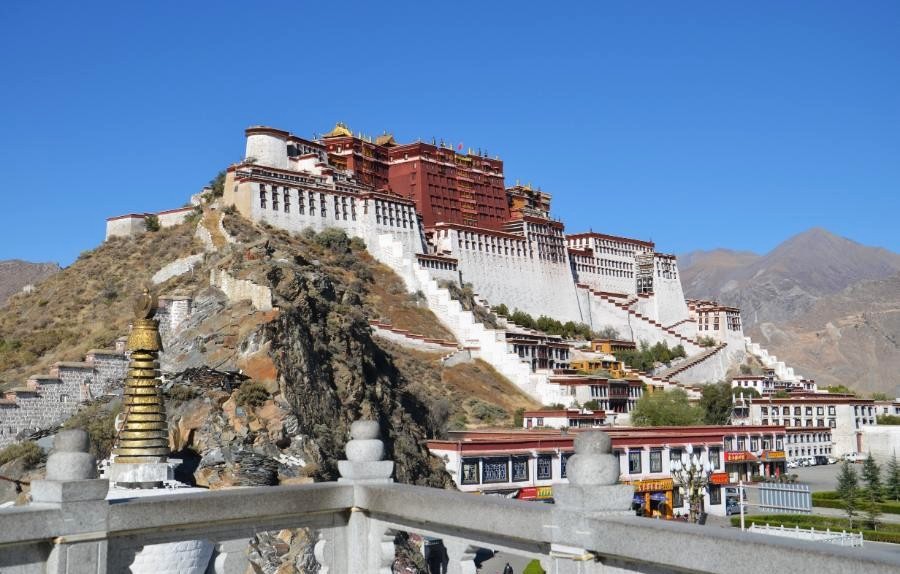
- Lhasa with the Potala Palace and the Jokhang Temple – the spiritual and political centre of the country
- The Samye Monastery – the first Buddhist monastery in Tibet and a symbol of the introduction of Buddhism. It impresses with its unique mandala-shaped architecture and spiritual atmosphere
- The historic city of Gyantse with the Kumbum Stupa
- Shigatse – home of the Tashilhunpo Monastery, seat of the Panchen Lama
- The tradition-rich Sakya Monastery, centre of the Sakya school of Tibetan Buddhism with an important library of rare scriptures
- The vast Lake Manasarovar, one of the highest-lying freshwater lakes in the world and also an important place of pilgrimage
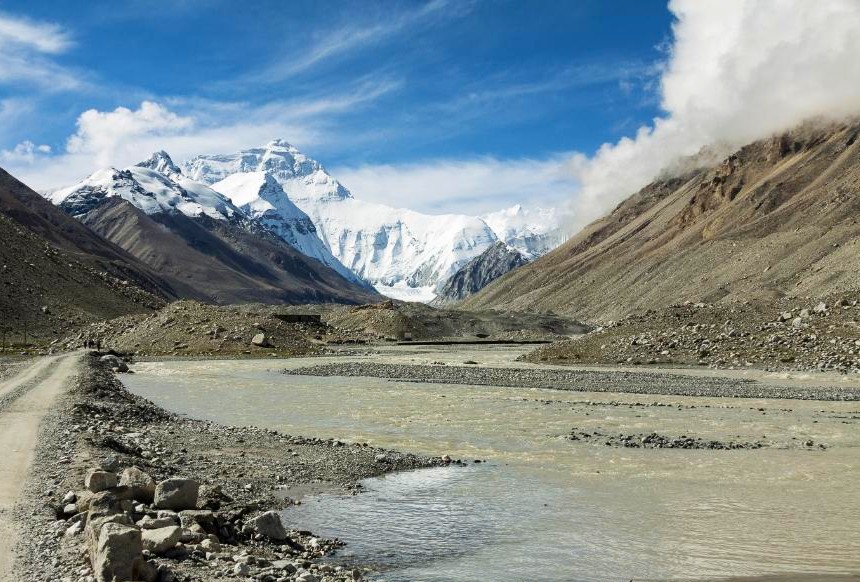
- The Everest Base Camp – spectacular views of the highest mountain on earth
- The mysterious Guge Kingdom – a historic site with unique cave monasteries and murals in the far west of Tibet
These stations make it clear that a trip to the Kailash circumambulation is far more than just a trek: it is a comprehensive Tibet tour that touches you deeply, both scenically and culturally.
Important equipment for the Kailash circumambulation
The altitude, the harsh climate and the changeable weather in western Tibet make good equipment essential. We particularly recommend:
- Sleeping bag with a comfort range of at least -5 °C
- Wind- and water-repellent jacket (windstopper)
- Down jacket for cold nights and early mornings
- Thermal underwear (several layers)
- Trekking poles for stable footing on uneven terrain
- Headwear against cold and sun (e.g. hat & sun hat)
- Sunscreen with high UV protection (at least SPF 50)
- Gloves – preferably windproof and insulating
- Good, broken-in ankle-high trekking boots with a profiled sole
For a detailed packing list and personal advice, we are of course happy to assist you.
Best time to travel & the Saga Dawa Festival
The best time to travel to Tibet is from May to the end of September. During these months the passes are usually free of snow, the days are long and clear – perfect conditions for trekking and cultural tours.
Particularly impressive is a visit at the time of the Saga Dawa Festival (usually in May or June). This festival commemorates the birth, enlightenment and death of the Buddha and attracts thousands of pilgrims to Mt. Kailash every year. The atmosphere during the Kora at this time is marked by deep spirituality and a great sense of community – an extraordinary experience for every visitor.
But even outside the festival period, Tibet shows itself at its most beautiful – with quiet monasteries, vast high plateaus and intense nature.
Conclusion: the Kailash circumambulation – a journey for body, mind and soul
The Kailash circumambulation is not a simple hike – it is a path of inner contemplation, spiritual renewal and deep connection with one of the most fascinating regions in the world. Anyone who takes on this Tibet trip will be richly rewarded – with unforgettable impressions, impressive encounters and a new perspective on life.